
Diwali: The Festival of Lights
History, Symbols, and Meaning from Chicago to the World
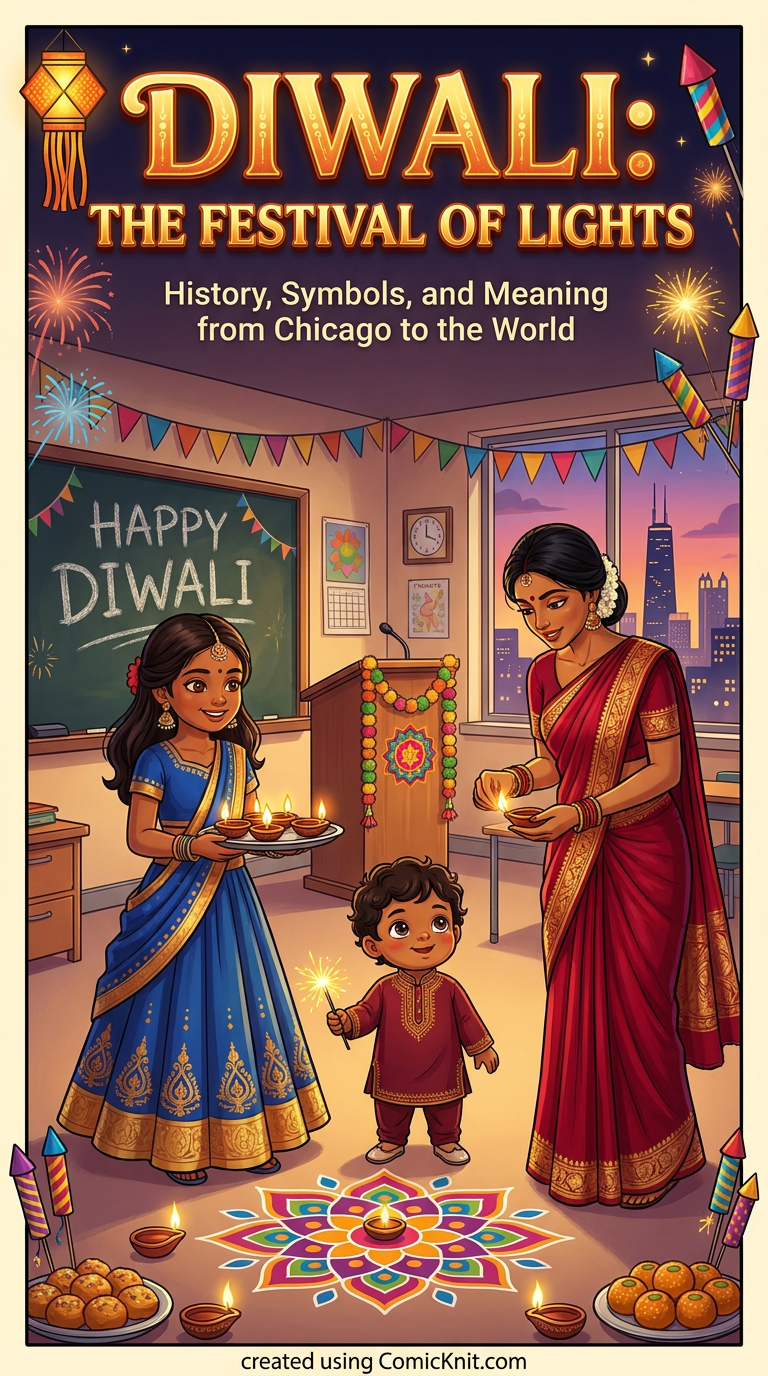
Read the transcript(text of every page of Diwali: The Festival of Lights)
Key facts
- The word Diwali derives from the Sanskrit word Deepavali, meaning a row or series of clay oil lamps.
- A clay diya burns oil through a cotton wick to symbolize how inner wisdom dispels ignorance and darkness.
- Diwali commemorates the return of Lord Rama, Sita, and Lakshmana to Ayodhya after 14 years in exile.
- Rangoli artwork made from colored powders is drawn at home entrances to welcome good fortune and guests.
- Over one billion people worldwide celebrate Diwali across Hindu, Sikh, Jain, and Buddhist traditions.
Page 1
Why do millions of families across the world light little clay lamps during the darkest night of autumn?
Dhvani: Hello class! Today for show-and-tell, I am sharing my family holiday: Diwali!
The word Diwali comes from Sanskrit Deepavali, which literally means a row of clay lamps.
Dhvani: My little brother Abhimanyu and I love this festival because it brings light, joy, and family together!
Page 2
A diya is a clay lamp. The clay body represents earth, oil fuels energy, and flame represents knowledge.
Dhvani: Lighting a diya pushes away dark shadows, just like learning clears away confusion!
Before Diwali begins, families clean their homes and decorate doorways with rangoli art made from bright powders and flower petals.
Dhvani: Rangoli art welcomes friends and good luck right at our doorstep!
Page 3
Diwali roots trace back to the Ramayana epic, honoring Rama, Sita, and Lakshmana returning home after 14 years.
Dhvani: Because their return fell on a dark moonless night, townspeople lit lamps to guide them!
Every window and pathway in Ayodhya glowed with rows of lights. Goodness had prevailed, and hope returned.
Page 4
Diwali is a multi-day celebration of renewal. Wearing new ethnic clothes symbolizes starting fresh with a clean heart.
Dhvani: Dressing in colorful clothes reminds us to bring bright energy into the new year!
During Lakshmi Puja, families gather to offer prayers for health, wisdom, and spiritual prosperity.
Dhvani: We pray for peace, happiness, and good health for everyone around the world.
Page 5
Night brings the splash of fireworks and sparklers, filling dark skies with brilliant colors and cheerful laughter.
Dhvani: Look at the sparkles, Abhimanyu! Light shines brightest when it is dark outside!
Sharing delicious mithai (sweets) with friends and neighbors spreads sweetness in relationships and builds community bond.
Dhvani: Sharing sweet treats is our way of sharing happiness and friendship with everyone!
Page 6
Over one billion people across Hindu, Sikh, Jain, and Buddhist communities celebrate Diwali, each honoring light and liberation.
Dhvani: Even though different communities have unique stories, we all celebrate the victory of truth and kindness!
The deepest message of Diwali is that every person carries an inner light of kindness, courage, and wisdom.
Dhvani: When we share kindness and help others, our inner light shines bright every single day!
Page 7
Around the world, many cultures use light during dark seasons to bring warmth, hope, and togetherness to their communities.
Dhvani: Whether it is diyas, sky lanterns, or holiday candles, humans everywhere use light to kindle hope!
Happy Diwali! May the festival of lights bring warmth, joy, and wisdom to your home and heart!
Dhvani: Thank you for letting me share Diwali with you all! Happy Diwali!