
LearnWithDad: The Time Before the Screen
A Journey Sixty Years Back
When Swara wonders how people survived without smartphones and the internet, Dad takes her and Dakshu on a mental Imagination Ferry trip back to the 1960s, exploring five daily activities and discovering the slow, tactile magic of life before screens.
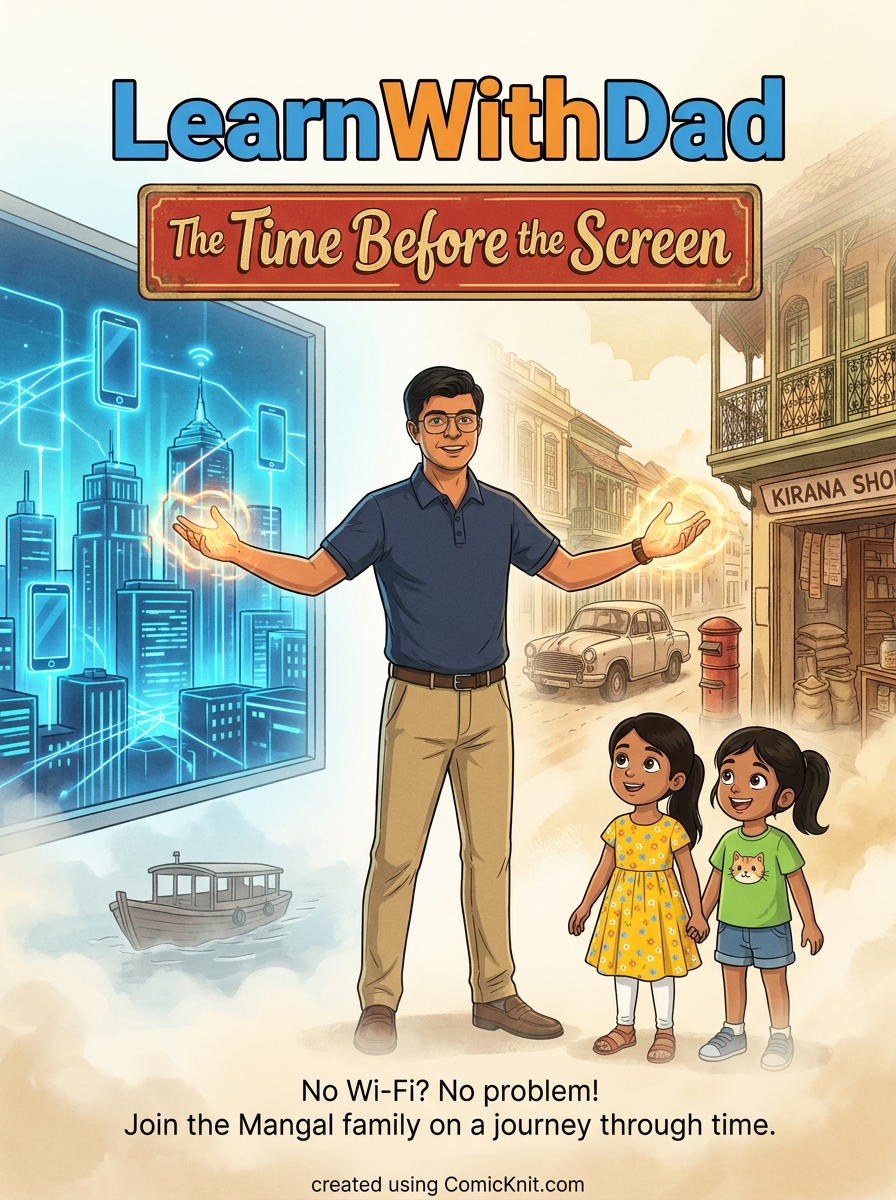
Read the transcript(text of every page of LearnWithDad: The Time Before the Screen)
Page 1
Bangalore. The Mangal home. A perfectly ordinary Saturday afternoon — until the internet died.
Swara: Ugh! No internet again!
Swara: Dad, how did people even live without internet? Like… ever?
Dad: Swara, that is a brilliant question.
Dad: Sixty years ago, there were no phones, no internet, no TV remotes — and people were just fine.
Dakshu: No TV?!
Swara: But… how did they do anything?
Page 2
Dad: We are going to travel back in time — but not by machine.
Dad: We will use the most powerful vehicle ever built — our imagination.
Dad: I call it… the Imagination Ferry.
Dad: Close your eyes. Both of you.
Dakshu: Are there animals on this ferry, Papa?
Swara: Dakshu, shh! We are imagining.
Sound effect: WHOOOOSH
The Imagination Ferry carried them back… sixty whole years.
Page 3
Lesson 1: How did you talk to someone far away?
Dad: Sixty years ago, if you wanted to talk to your cousin in Delhi, you wrote a letter.
Dad: You put it in this red box, and a postman carried it by hand, train, and bus.
Swara: So… it was like a text message.
Swara: But in super-super slow motion. And it took seven whole days?
Dad: Exactly, beta! And when the reply finally arrived, the excitement was like ten birthdays at once.
Dakshu: Ten birthdays?! Can we eat cake too?
Page 4
Lesson 2: How did people buy their groceries?
Dakshu: Swara Didi, where is the barcode? How does the machine know the price?
Swara: There is no machine, Dakshu. The shopkeeper just… knows.
Dad: No plastic bags. Everything was weighed on that scale and wrapped in newspaper.
Dad: And you brought your own cloth bag from home.
Swara: So they brought their own bags and nothing was wasted. That is actually quite smart.
Dakshu: Papa, I hear music! Where is it coming from?
Sound effect: ♪ CRACKLE ♪
Page 5
Lesson 3: How did families hear music, stories, and news?
Dad: The whole family gathered around one radio. No earphones. No separate screens.
Dad: Everyone heard the same song, the same cricket score, the same story — together.
Sound effect: ♪ STATIC... ♪
Dakshu: So everyone listened together? Like at a park?
Dad: Ah! Our next lesson is already waiting for us.
Swara: Is that man reading a… very large paper?
Page 6
Lesson 4: How did people find their way to new places?
Swara: How do you even fold this back?!
Dakshu: Swara Didi looks like the map ate her!
Dad: The map helped, but your best navigation tool was that man there.
Dad: You would stop, greet him, and ask for directions. He was the 'Google Maps' of his day.
Dakshu: Papa, I am SO thirsty. Is there a fridge somewhere?
Dad: No fridge. But something even better. Come!
Page 7
Lesson 5: No refrigerator. How did they keep water cold?
Dad: This is a matka — a clay pot. The clay has tiny holes that let water seep out slowly.
Dad: As the water evaporates outside, it keeps the water inside beautifully cool.
Dakshu: Mmm! It IS cold! And it tastes like… like earth? In a good way!
Swara: It is because the clay gives it a natural, earthy flavour. I read about that!
Dad: Nature's own refrigerator. No electricity needed.
Swara: Papa… I think our ferry is coming back.
Sound effect: WHOOOOSH
Page 8
The Imagination Ferry docked safely back in Bangalore. Same living room. Different eyes.
Swara: Life was slower back then.
Swara: But maybe… slower meant you really felt things. Waited for them. Liked them more.
Dakshu: Papa! Can we go back on the ferry?! I want to see the 1960s dogs!
Dakshu: Were there dogs? Were they fluffy?
And for the rest of that golden afternoon, the Mangal family needed no Wi-Fi at all.
Dad: The core of life — food, family, messages, finding your way — never changed.
Dad: Only the speed changed. And perhaps… we can choose our speed sometimes.
Swara: Then maybe the internet can wait a little longer today.